Forgotten Gems of SPFX Part Seven

Matte Shot – a tribute to Golden Era & Traditional Special Effects is a tribute to the artistry and ingenuity of traditional matte painters, this collection celebrates the hand‑crafted movie magic that once shaped cinema — from grand, epic vistas to invisible effects even seasoned viewers might miss. It’s designed for both casual fans and dedicated enthusiasts, offering a renewed appreciation for skills largely forgotten today.
So, here’s the latest from the Archives of Matte Shot …

I’ve forever been a great fan and follower of that most American of motion picture genre’s: the western. You just couldn’t find anything else that’s so quintessentially part of the fabric that makes up their identity. I couldn’t even guess at just how many cowboy pictures I’ve seen over the years, and continue to see. There have been so many great cowboy flicks over the past 80 odd years of Hollywood, with evergreen titles such as THE SEARCHERS, JOHNNY GUITAR, THE HIRED HAND, TRUE GRIT (the original of course), THE WILD BUNCH, HIGH NOON, BAD COMPANY, THE COWBOYS, SOLDIER BLUE, THE BALLAD OF CABLE HOGUE, EL DORADO (a fave of NZPete) and a couple of recent titles such as Quentin Tarantino’s wonderful THE HATEFUL EIGHT and another recent little known, though excellent, low budget Kurt Russell western with a genre twist, the utterly brilliant BONE TOMAHAWK which I can’t recommend highly enough. Rarely have I seen a film from this genre with such beautifully crafted dialogue and characterisations. One for repeat viewing in my book. See it, or face the eternal wrath of NZPete!
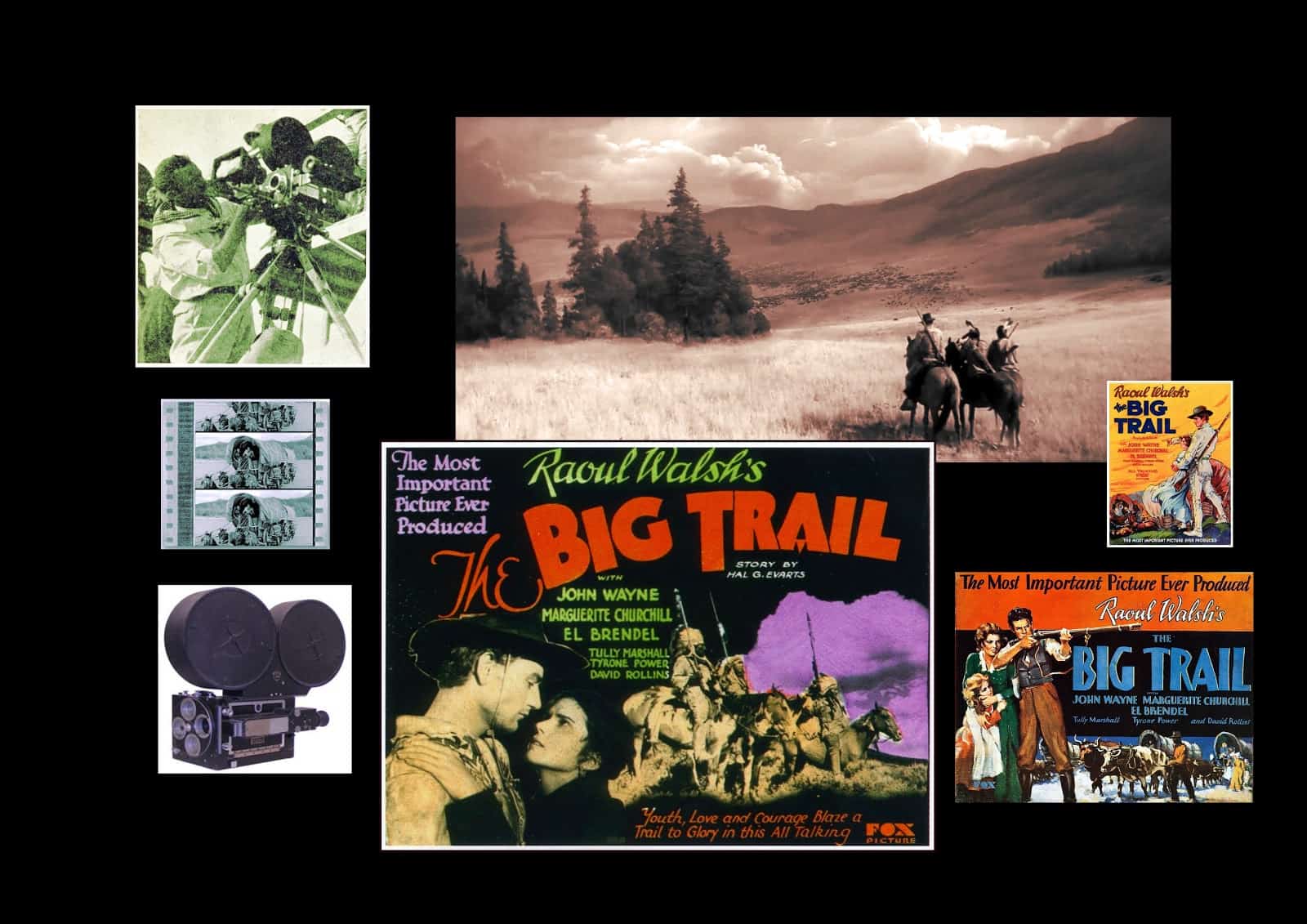
Today’s retrospective looks at one of, if not the earliest of the epic western films Raoul Walsh’s monumental THE BIG TRAIL produced by Fox in 1930. The film is exceptional on a number of levels, not the least being the ground breaking use of the then revolutionary new wide screen process known as Grandeur which would see 65mm negative being utilised for one of the first feature length motion pictures. It had been used experimentally on a couple of short subjects in 1929 and on one full length ‘musical’, which oddly was silent and had the lyrics etc on intertitle cards as the performers ‘sang’ their hearts out (!) I’ll talk more about the Grandeur Widescreen Process shortly…
…Read the Full Article @ Matte Shot…