
We Push Rachel Carey Further

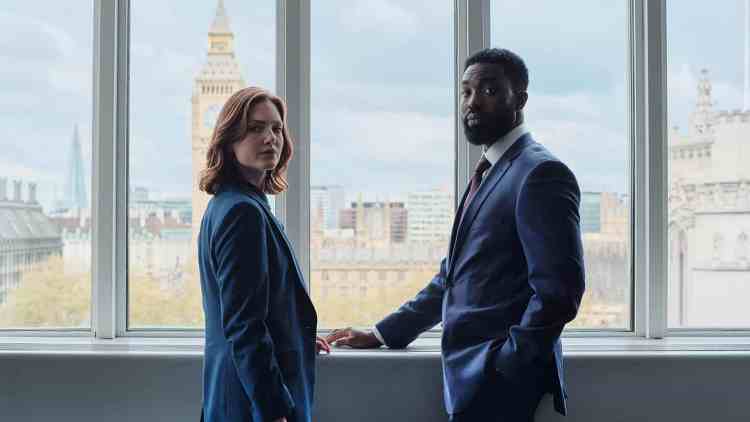
How do you protect the truth, in a world where lies are daily currency? And with the proliferation of deepfakes, how can we trust what we see?
It’s been 12 months since Rachel Carey (Holliday Grainger) broadcast a live deepfake of a government minister to the nation, exposing the UK intelligence service’s clandestine video manipulation programme known as Correction.
Amidst an inquiry into the unlawful use of Correction, Carey has become Acting Commander of Counter Terrorism Command, determined to regain the public’s trust in surveillance technology through the new Operation Veritas camera system.
And then it happens: a brutal and exceptionally well-coordinated act of terror aimed right at the heart of the British establishment that leaves behind just one witness.
The more Carey investigates, the deeper she is drawn into an unfolding geopolitical crisis that infects the British political establishment, the security services, and the media. The conspiracy reaches deep into the State, but just who is pulling the strings?
Caught in an increasingly violent situation, and with few allies left to trust, what sacrifices will Carey be willing to make?
Meet the Cast and Creatives
Ben Chanan (Writer, Creator, Executive Producer and Director)
Can you give us an overview of series three?
Series three of The Capture is all about Rachel Carey. Up until now, she’s been the one investigating, but this time, she is the lead. Series one asked “Can you trust CCTV?”, series two asked “Can you trust the news?”, and series three asks “Can you trust your own eyes?”
The series picks up after Rachel exposes the Correction programme live on TV in Piccadilly Circus at the end of series two, and it explores who is ultimately responsible. Following Rachel’s next chapter was essential, but I also wanted the series to feel fresh, with a new thematic focus on trusting your own perception rather than screens or news.
Can you walk us through the process of developing the scripts for this series?
It all starts in the writers’ room. We spend a couple of weeks throwing around ideas, and then I take them home and write. Writing action sequences is always a challenge; I often physically imagine them, walking around like an action hero, which is a bit embarrassing but effective! There are major character deaths in this series. These were carefully considered – every loss is meaningful and well-earned, which keeps the stakes high.
What can you tell us about the enigmatic Noah Pierson and his role this series?
Noah Pierson is probably my favourite character I’ve written for the show – he is deeply mysterious and disagreeable. “Who is Noah Pierson?” is the central mystery of the series, he appears one way, then another, keeping audiences guessing. Killian Scott nails the role, delivering believable action and dramatic intensity. From the moment he read, we knew he was right.
Holliday Grainger (Rachel Carey)
How has Rachel’s character developed across the first two series?
When we first meet Carey in series one, she’s on the fast-track scheme in the Met – ambitious, determined, and not necessarily making friends. She discovers Correction, an illegal system of faking video evidence, and because of her strong moral compass, she becomes a whistleblower rather than looking the other way. Across series one and two, she fights to expose Correction, and by series three she’s risen rapidly through the ranks. She believes her integrity is intact but series three explores what happens when those morals begin to fracture.
What makes Ben Chanan’s scripts so enjoyable to read and perform?
I always get excited because I genuinely want to know what happens next. This series was particularly fun because Ben was still writing as we were filming, so I only had the first three episodes at the start. Carey doesn’t know what’s coming, and neither did I, so I could discover the story alongside her. It’s been exciting to be back in Ben’s world.
How was it stepping back into Carey’s character?
I relied on the research I did back in series one, including shadowing officers in the Met and speaking to fast-track DIs. Each series builds on that foundation. This time, Carey carries a gun for the first time, so we had firearms training. It’s always fun learning new skills and it was great feeling like an action hero for a moment!
How was it working with Killian Scott?
He’s a lovely person and a fantastic actor. Noah has so many different facets, and each episode reveals a different side of him. Watching Killian bring all of that to life has been really fun.
Series three includes more action. How did you find filming those sequences?
I love doing action scenes. The show is very cerebral, and I enjoy the long dialogue scenes and police work, but it’s also great fun doing chase sequences and action. It adds a different energy.
Can you tell us about sets and locations?
The sets are incredible, especially the Counter Terrorism Command ops room, which has the biggest screen I’ve ever seen. Episode five also takes us underground, using tunnels beneath Paddington and King’s Cross to double as secret government passageways. They’re eerie, historic, and visually striking, even if it was tough being underground for a week!
What makes The Capture stand out, and why do you think the show continues to resonate with viewers?
It’s a thriller and a detective drama, but it also has elements of science fiction. It feels like a long-form Black Mirror. Each series explores technology that feels just one step ahead of reality, from CCTV to deepfakes to AI. Ben takes real truths and asks “what if?”, encouraging audiences to question the world we’re living in. What once felt futuristic now feels real. People are still discovering the show, and its themes keep catching up with the world.
What do you think will shock or surprise viewers this series?
Everything. Every episode has a revelation, a twist, or a cliffhanger. I tried to guess what would happen and I didn’t succeed.
Ron Perlman (Frank Napier)
What’s it been like returning to The Capture for series three?
It’s been a dream. It’s been three years since series two. I love the world Ben has created, and I love playing Frank. There’s something very special about being an American actor invited to work at the BBC – it has exquisite taste, takes storytelling seriously, and it’s a real cultural icon. I come to it with a great deal of appreciation.
Can you remind us where has Frank been in series one and two?
The Capture encapsulates all facets of law enforcement – MI5, MI6, elite police work and the CIA. Frank exists in that uneasy space where British intelligence and the CIA overlap. At its core, the show explores the tools required to prevent terrorism, while walking a fine line between protecting human rights and stopping catastrophe. Sometimes you know someone is guilty, but you don’t have the evidence, and that’s where things get morally complicated.
How has Frank’s relationship with Rachel Carey developed in series three?
It’s always been uneasy. Rachel is idealistic, determined, and very careful never to cross legal lines. Frank is older, has seen more, and is more willing to blur those lines because he’s lived through the consequences of getting it wrong. There’s tension between them but also respect. He recognises how intelligent and ambitious she is, qualities he admires, and maybe finds a little intimidating.
Why do you think The Capture has resonated so strongly with audiences?
It’s a very trippy, mind-bending world. It gives you a glimpse into what’s happening behind the scenes of things we sense but don’t fully see. Ben Chanan is one of the most talented writers I’ve ever worked with. He explores the pressure cooker of counter terrorism, the reality that you have to get it right every time, because one slip means buildings fall and lives are lost. His storytelling is elegant, clever, and relentlessly tense.
Why do you think the show’s themes of deepfakes and altered surveillance feel more relevant than ever?
When we started, AI wasn’t even part of the conversation. Deepfakes and image manipulation were brand new ideas, and Ben already had his finger on the pulse. What felt cutting edge then has now become our reality, which makes the show feel even more urgent.
Killian Scott (Noah Pierson)
This is your first series on The Capture. How has it been joining the cast?
It’s been very easy, actually. Everyone was incredibly welcoming, and it’s a very well-oiled machine, from Ben’s writing to Derek’s producing, with Holliday leading the show brilliantly. Ron Perlman and the regular cast were already so established that I just tried to slot in and keep up. When the scripts are that strong, everything tends to fall into place.
What made you want to be part of the show?
Quite simply, it’s very good writing. Any actor responds to that. Ben has a real skill for balancing sophisticated surveillance and technology with very human stories at the centre. You get all the elements of a classic espionage thriller, but with fully rounded characters under intense personal pressure. For me, Noah was particularly appealing, a mysterious, multi-faceted character.
What was it like stepping onto the CTC set for the first time?
Quite intimidating. There are people everywhere and screens constantly running surveillance and data. But the set is so well designed that once you step into it, it does a lot of the work for you. It feels like a real, functioning environment.
How does The Capture differ from other thrillers?
It’s the balance. You get strong emotional stakes and believable characters alongside sophisticated thriller and espionage elements. Nothing is sacrificed for the other, it all coexists. It feels influenced by classic le Carré-style storytelling but grounded in very human drama.
The show’s themes of deepfakes and altered surveillance feel very relevant. Why do you think that is?
Ben is clearly interested in where technology might be heading, not just where it is now. The tech in the show is slightly ahead of reality, which allows him to explore how it could evolve, for good or for bad. That’s what makes it unsettling and interesting.
Paapa Essiedu (Isaac Turner)
Can you tell us where we find Isaac Turner in this series?
Isaac is probably at the peak of his journey. Everything in his life is going well, his family life, his work life, so, what could go wrong?
How has it been returning to set and working with Holliday and the wider cast?
I’ve loved being back on set with Holliday. She’s such an amazing actor and person, and acting opposite her is always so easy and natural. The new cast members have also been extraordinary, I’ve loved watching Killian and Isabella work. It’s always exciting on The Capture, so it was really nice to come back into that environment.
This first half of this series is directed by Anthony Philipson, how was it working with him?
Anthony Philipson is a real vibe. He doesn’t have the formality you might expect on a show like this. He’s super easy-going and relaxed, but also very confident and clear about what he wants. He brings great energy to the set, and I’ve really loved working with him.
How do you find days where you’ve got stunts, makeup and technical elements to think about?
They’re very technical and quite bitty, but they give everyone the chance to operate at the top of their game. Dialogue-heavy scenes can be so focused on the acting, whereas days like that really allow the whole crew to shine. We’ve got an amazing DOP, lighting team, makeup, costume – on days like this, everyone’s encouraged to work at their best, and it feels like a very communal effort.
Ginny Holder (Nadia Latif)
Where do we find Nadia in series three?
Nadia started as a DS in series one and worked her way up to DI through sheer determination. By series three, she’s in CTC, her dream job, and has been there for about a year. She’s working under Carey as acting commander, and they’re introducing new technology designed to prevent Correction. It’s called Operation Veritas, a camera system that supposedly can’t be manipulated.
How did you get back into character for this series?
I always meet with our advisor, Chris Byrne, who works in intelligence and has real world experience of the roles we depict in the series. We talk about what’s happening in the world, how CTC operates, and what the job really involves. We spent hours talking over lunch, and that always gets me back into Nadia. She’s a police officer through and through, that’s her foundation.
How has Nadia’s relationship with Rachel evolved?
It’s changed a lot. In series two, Nadia was frustrated with Carey after being demoted, but by the end of that series she sees Carey’s integrity and determination. In series three, there’s deep respect between them. Nadia is very protective of Carey. There’s trust now, and you really feel the depth of their relationship.
In the new series, Rachel claims to have seen something that goes against footage from multiple cameras. How does Nadia react?
Nadia follows the evidence. The footage shows one thing, Rachel says another, and that creates tension. Nadia believes in facts, proof, and process, so when those things clash with instinct, it causes friction.
What do you love most about Ben Chanan’s writing?
It’s truthful. He writes about what’s really happening in society, power, surveillance, politics, control. His work feels urgent and relevant. That’s why it resonates so strongly with viewers. Ben predicted the world we’re living in. You see cameras everywhere now. Surveillance is constant. He explores who really holds the power – politicians, technology, corporations – and that question feels more urgent than ever. The show reflects a reality people already sense is happening.
Why do you think people connect so strongly with The Capture?
Because it tells a truth people feel but can’t always articulate. People know something isn’t quite right in the world, and this show taps into that. That’s why audiences are drawn to it, it validates their instincts.
Tessa Wong (Chloe Tan)
Where do we find DC Chloe Tan in series three?
Chloe is very much a shadow of Rachel Carey. She came up through the programme quickly and is eager to prove herself. She’s detail-driven, observant, and determined to earn her place. In series three she’s more embedded in the team, but still very focused on backing everything up with facts.
What were your highlights filming series three?
Running down The Strand with Ginny was a highlight. Filming in such a public space, with everything happening around us, was thrilling and completely different from studio work. Stepping back onto the CTC set was also amazing. Seeing the scale of it – all the screens, the detail – really brings the world to life. It feels incredibly real and immersive.
What sets The Capture apart from other thrillers?
It reflects the world we’re living in right now. The scary thing is how real it all feels, the technology, the politics, the questions around truth. It doesn’t feel far-fetched at all. Especially with Ben Chanan’s writing, he manages to stay so ahead of the curve – it’s uncanny! Things he’s written about appear in the news shortly after. He has an incredible grasp of where technology and society are heading, particularly with AI.
Rosie Alison (Executive Producer)
How has it been returning for series three and reuniting with the cast and crew?
It’s been a real joy bringing everyone back together. People loved series one and two, and once Ben had his lightbulb moment for series three, the cast couldn’t wait to return.
What was your reaction when Ben first shared his idea for series three?
Ben is always slightly ahead of his time. What once felt unbelievable has often turned out to be prescient. I knew that if he was going to do a third series, it had to capture the moment we’re living in now. Series one focused on CCTV, series two on deepfakes, and series three expands into AI and the wider question of whether we can trust what we see and hear.
How has it been working with Anthony Philipson this series?
It’s been brilliant. We loved his work on The Day of the Jackal, he can do thrilling action but also deep psychological storytelling. The Capture is all about twists and narrative momentum, and Anthony is incredibly detailed and precise about story.
What should audiences remember from series one and two?
At its heart, The Capture follows Rachel Carey, who begins as an idealistic young detective. She uncovers Correction, a secret video manipulation programme used by the intelligence services and makes it her mission to expose it. By the end of series two, she has succeeded. Series three finds her promoted, trusted by the public, and tasked with restoring faith in the system.
Why is Holliday Grainger perfect casting for Rachel Carey?
Holliday Grainger absolutely burns up the screen. She’s been the moral compass of the show from the start, but Carey is never preachy. She’s impulsive, impatient, flawed, and driven by integrity. Holliday plays all of that with extraordinary truth and force.
What did Killian Scott bring to the role?
Killian is wonderfully nuanced and mercurial. He can shift from charming to steely in a moment.
How does The Capture stand out and why do you think it feels so relevant?
It’s a thriller that grapples with the moral complexity of our world. It’s about propaganda, manipulation, and who controls the narrative. It feels wiser, more resonant, and deeply connected to the times we live in. What once felt provocative now feels real. Deepfakes, misinformation, and manipulated footage are everywhere. The world has caught up with Ben’s writing, and The Capture reflects our collective unease about what is true. It speaks directly to our anxieties about truth and trust, but it does so through rich characters, wit, humanity, and thrilling storytelling. People love Rachel Carey and her flawed, determined pursuit of truth.
Derek Ritchie (Producer & Executive Producer)
Where do we pick-up on The Capture in series three?
At the end of series two, Rachel Carey and a group of whistleblowers exposed Correction, a secret programme (used by intelligence services) manipulating video footage. That led to major fallout: Gemma Garland was disgraced, Danny Hart stepped away, and Frank Napier disappeared into the shadows. As series three begins, Carey is riding high, leading S015 and trying to eradicate Correction for good through Operation Veritas, a new, supposedly correction-proof camera system.
What was your initial reaction when you read Ben Chanan’s scripts for series three?
I was gobsmacked by how audacious they were. Episode one contains a cliffhanger that I’d be amazed if anyone sees coming. Each episode builds momentum and then pulls the rug out from under you. Ben is a master of thriller writing, and it’s exciting to see how he’s elevated the show again and introduced bold new characters.
Why is Holliday Grainger perfect casting for Rachel Carey?
Holliday Grainger is extraordinary. This show demands complex psychological performances, and so much of her storytelling is non-verbal, in close-ups, in what she can’t say. She communicates thought, fear, and moral conflict with incredible nuance. I genuinely can’t imagine anyone else playing Rachel Carey.
What does the ensemble cast bring to the series?
We’re incredibly lucky. Indira Varma is magnificent as Khadija Khan, she could genuinely be a BBC journalist. Ginny Holder brings warmth, wit, and humanity to every scene and is a vital part of the show’s DNA. Joe Dempsie joins this series as James Whitlock and brings nuance and depth to a character who lives firmly in the moral grey area that defines The Capture.
How would you describe the overall look and feel of series three?
The show is bigger, bolder, and more polished. CTC has expanded, reflecting Carey’s rise and new resources. Operation Veritas has its own distinct visual language, particularly in how the screens work. We’ve embraced London and the UK fully, from Westminster to Dover, giving the series greater scale and visual ambition.
Why do you think The Capture continues to resonate with audiences?
The show feels slightly ahead of the curve. It explores what technology might do in the near future, not just what it does now. The fear of being falsely accused or manipulated through technology is deeply relatable, and that paranoia makes for powerful thriller storytelling.
What will shock or surprise audiences this series?
We push Rachel Carey further than ever before. Audiences will be shocked not just by what happens to her, but by what she’s driven to do. The emotional connection to Rachel is where the biggest shocks lie.
Anthony Philipson (Director)
This is your first series on the show. How was it joining the The Capture team, and were you a fan beforehand?
I adored The Capture from the start. Series one was a huge cultural moment, people still talk about the London bus, and series two pushed it further into the political arena. So being sent the scripts for series three was hugely exciting. Ben Chanan is such a distinctive writer; his dialogue is sharp, the worlds he creates are visceral, and as a director it’s a joy because you can focus on bringing his complex story to life.
How did your collaboration with Ben Chanan work?
Working with Ben is hugely rewarding. We both come from documentary backgrounds, so our shared focus is always on human storytelling. Ben is incredibly adept at balancing sharp dialogue with complex narrative, and he’s also very bold. That confidence in the writing gives you permission as a director to be bold too – with choices, framing, and performance. There’s a real trust there, which is invaluable.
What was it like directing Holliday Grainger?
Holliday is extraordinary. Coming onto a show where she’s lived with this character for years could be daunting, but she was incredibly welcoming and collaborative. Her performance in series three is astounding, she carries the show emotionally, and you live every moment with her. Watching her transform into Rachel Carey is a privilege.
How does The Capture stand out?
What once felt like science fiction now feels real. The technology in The Capture could exist today, which makes it unsettling. It’s not escapism, it feels plausible, almost documentary-like at times. That realism is what makes it so gripping.

Comments are closed.